In today’s fast-paced clinical environments, Point-of-Care Ultrasound (POCUS) has become an invaluable tool for immediate diagnostic insight and procedural guidance. Whether you're managing a crashing patient in the ER, guiding a joint injection, or ruling out a pneumothorax, the effectiveness of POCUS hinges on one critical factor: your ability to acquire and interpret images accurately.
That’s why hands-on skills training is not just helpful, it’s essential.
POCUS Is Operator-Dependent
Unlike many diagnostic tools, POCUS is highly dependent on the operator’s skill. Proper image acquisition requires more than knowing where to place the probe; it demands a deep understanding of how to adjust angles, apply pressure, optimize machine settings, and interpret what you see in real time. The difference between a diagnostic-quality image and a non-diagnostic one can be millimeters of probe movement.
Anatomy and Pathology Are Dynamic
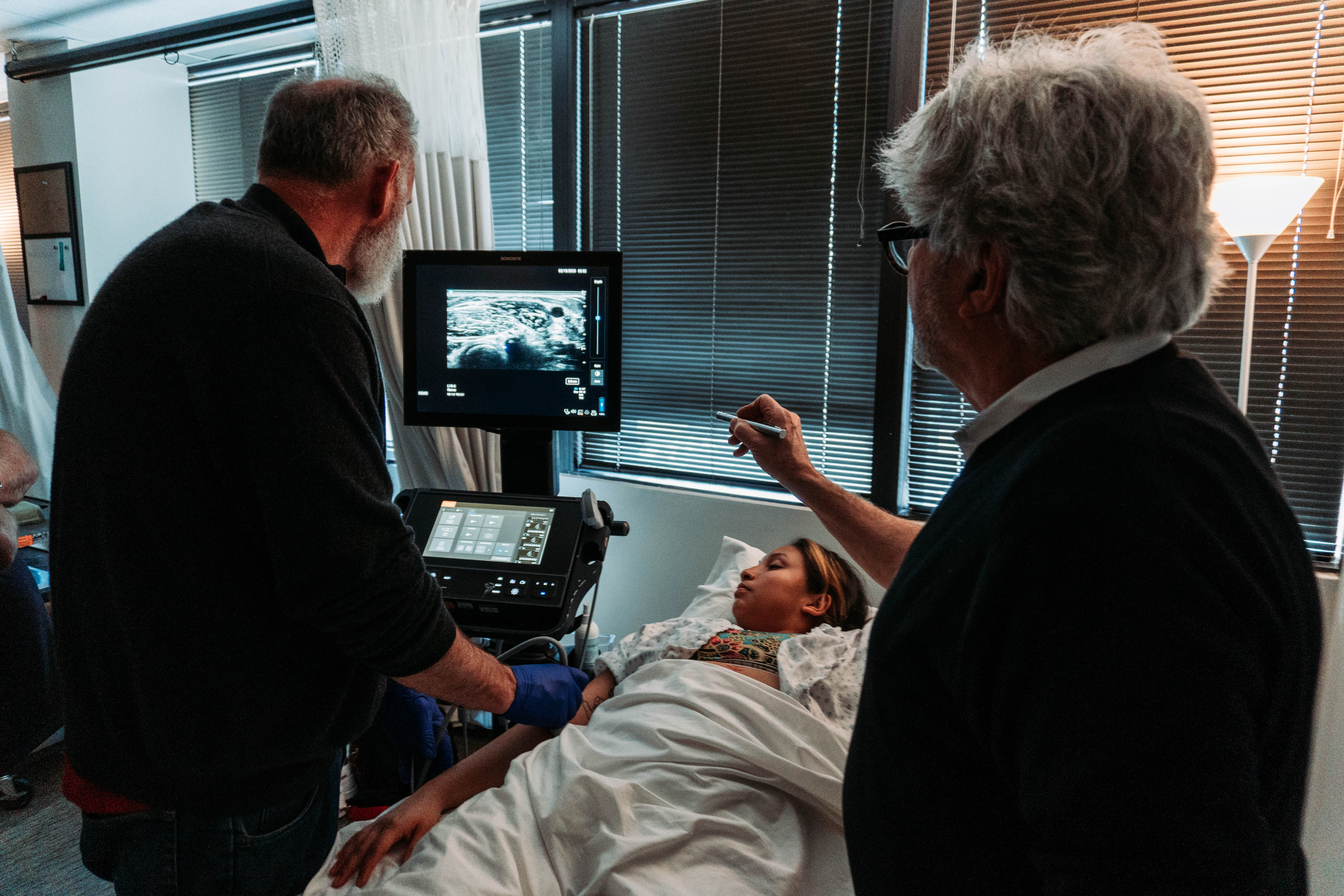
No two patients are alike, and real-world anatomy doesn’t always look like it does in the textbook. Hands-on training allows clinicians to scan different body types and pathologies, gaining a realistic perspective that is impossible to achieve through lectures alone. Learning how fluid collections, air, or masses appear across a spectrum of patients is crucial for building diagnostic accuracy.
Real-Time Feedback Builds Confidence
One of the most valuable aspects of hands-on learning is immediate instructor feedback. Being able to ask, “Am I in the right spot?” and receive real-time guidance is what accelerates learning and ensures bad habits don’t form. This feedback loop dramatically improves retention and builds the confidence needed to use POCUS independently in clinical practice.
Ultrasound Is a Skill-Based Modality
Just like intubation or suturing, ultrasound is a manual skill that must be practiced. Watching videos or reading protocols is not enough. You must develop the muscle memory and spatial awareness to navigate a transducer across the body and interpret moving images, often under pressure. Without consistent, hands-on repetition, even experienced clinicians can struggle to perform high-quality scans.
POCUS Influences Clinical Decision-Making
In emergency and critical care settings, decisions often depend on the accuracy of a bedside ultrasound. Misidentifying pericardial effusion, missing a pneumothorax, or poorly guiding a central line could have serious consequences. Hands-on training helps reduce these risks by ensuring clinicians are prepared to make accurate assessments and safe procedural decisions.
Bridging the Gap: Knowledge to Practice
Ultimately, hands-on POCUS training serves as the bridge between theoretical knowledge and practical application. It transforms guidelines, protocols, and image libraries into real-time skills you can deploy at the bedside.
Train with the Leaders in Ultrasound Education
If you're serious about developing your POCUS skills, Gulfcoast Ultrasound Institute (GCUS) offers the gold standard in hands-on training. We have helped over 200,000 healthcare professionals world-wide integrate ultrasound into clinical practice to improve patient care and outcomes. With expert faculty, low participant-to-instructor ratios, and scan-intensive workshops tailored to your specialty, GCUS helps clinicians at every level translate ultrasound knowledge into confident, competent practice.
Whether you're just starting with POCUS or looking to refine your skills in emergency, musculoskeletal, critical care, or internal medicine applications, there's no substitute for hands-on experience, and there’s no better place to get it than GCUS.
Explore our upcoming POCUS courses by visiting www.gcus.com or give us a call at 727-363-4500 so we can help you choose the best course for your learning goals.